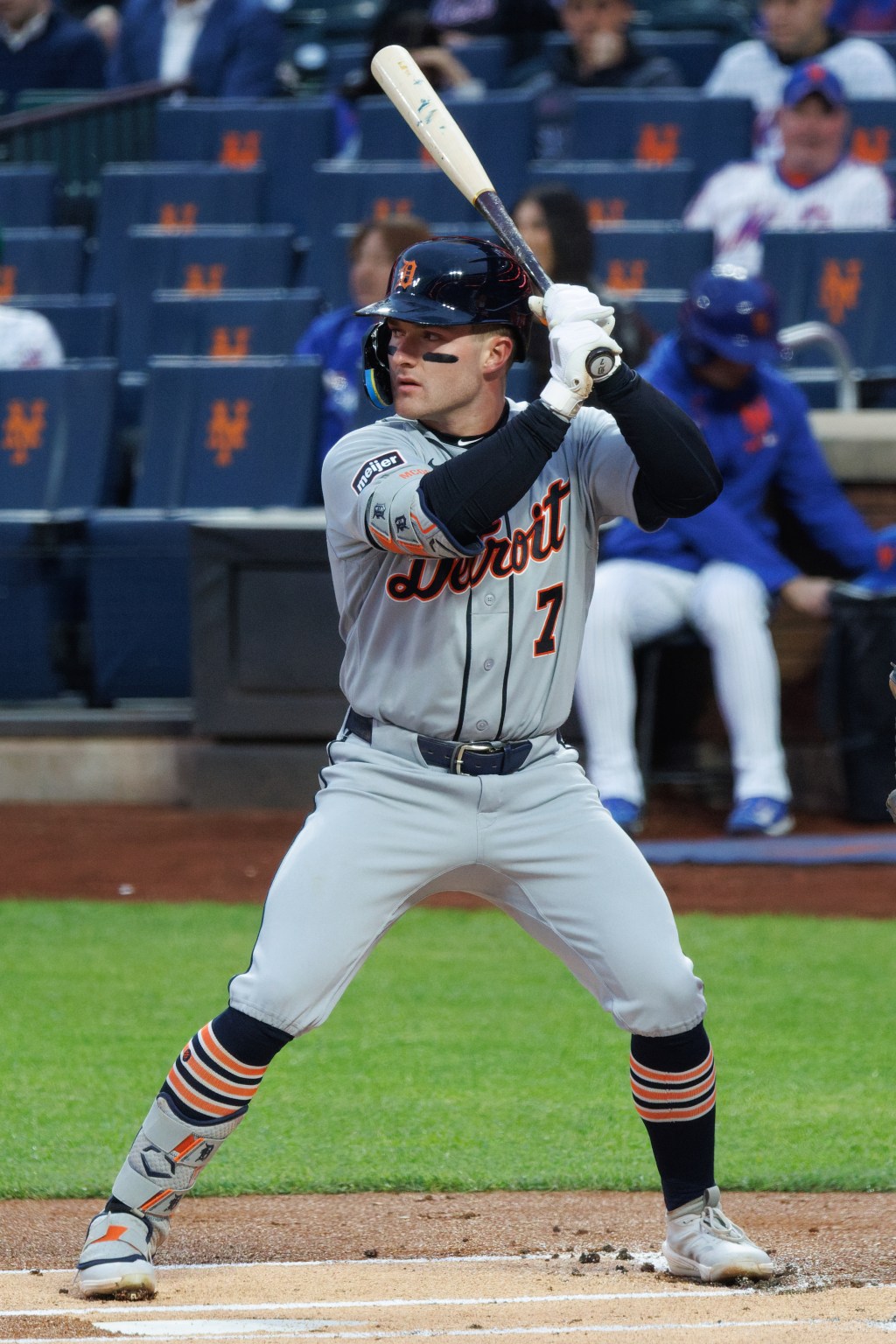
First at-bat of his debut, first pitch he saw, he swung. A two-run double with the bases loaded. Have you ever seen a debut like that? That is how Kevin McGonigle’s major league career began.
On the night of November 9, the Baseball Writers’ Association of America — the BBWAA, the writers who vote on MLB’s awards — announced the 2026 Rookie of the Year awards. In the American League, Detroit Tigers infielder Kevin McGonigle. In the National League, Cincinnati Reds infielder Sal Stewart. Both are 22 years old. But the real news that night wasn’t who won the trophy. It was what came with it — a draft pick.
Different From the Very First Pitch
When McGonigle arrived at spring training, all he had was 46 games at Double-A. Double-A is a minor league level; above it sits Triple-A, the last stop before the big leagues. McGonigle had never played Triple-A at all. He was supposed to start 2026 in the minor leagues.
Instead, on March 26, on the road in San Diego, he was in the Opening Day lineup. On the first pitch of his first at-bat, he drove in two runs with the bases loaded. He had four hits that day. He was the first Detroit player that young to make an Opening Day lineup since Omar Infante in 2003, and the first player that young to get four hits on Opening Day since Ken Griffey Jr., according to ESPN.
The season just kept going that way. 156 games, a .278 average, a .376 on-base percentage, 18 home runs, 72 RBIs, 97 runs, 28 doubles, 12 stolen bases. He came to the plate 707 times and collected 168 hits.
More striking than the numbers was how often he reached base: 266 times. The most by a rookie in Detroit franchise history. The record of 260, set by Harvey Kuenn in 1953, had stood for 73 years. Since 1990, the only rookies to reach base this often were Aaron Judge, Ichiro Suzuki, and Albert Pujols. All three won Rookie of the Year.
His 7.1 WAR led the entire American League, pitchers included. WAR — wins above replacement — is a single number for how many wins a player is worth to his team over a replacement-level player. The last rookie to lead a league in WAR was Mike Trout in 2012. It was also the sixth-best rookie WAR season ever. The only names ahead of him: Trout, Dick Allen, Judge, Fred Lynn, and Carlton Fisk.
The voting was overwhelming. 28 of 30 first-place votes, 204 points. Cleveland left-hander Parker Messick (122 points) and Boston left-hander Payton Tolle (54 points) followed. He was the sixth Detroit player to win since Michael Fulmer in 2016, and the first infielder since Lou Whitaker in 1978. He was the first player drafted and developed by the club to win since Justin Verlander in 2006.
In his acceptance, McGonigle said: “I’ve loved baseball since I was a kid, and I always believed I’d play on the biggest stage one day. Now that it’s real, I can’t put it into words. I couldn’t have done it without my family.”
A 21-Year-Old With No Suit, and $150 Million of Conviction
Detroit moved just 17 games into his debut. On April 15, an eight-year, $150 million extension, covering 2027 through 2034. With a $14 million signing bonus and escalators — salary bumps tied to performance — it can reach $160 million. It was the largest guarantee ever given to a player with fewer than 100 days of major league service time.
The story that he had no suit to wear to the signing came up again that night. McGonigle laughed and said he has since bought a suit for a wedding, and even a tuxedo for the writers’ dinner in New York next January, where he will pick up the award. “I have a suit now. Tailored to fit me. It’s not the one I wore to the signing.”
Why did the club bet $150 million after 17 games? The answer is in Delaware County, outside Philadelphia. The boy who grew up a Phillies fan idolizing Chase Utley was passed over by his hometown team in the draft. In the 2023 draft, Philadelphia used the 27th pick on another infielder, Aiden Miller. Ten picks later, Detroit took McGonigle 37th overall. He gave up his commitment to Auburn and turned pro, won Arizona Fall League MVP in 2025, and by spring training he ranked as the No. 2 prospect in all of baseball. The Arizona Fall League is an offseason showcase league for top prospects.
In July, at Citizens Bank Park in Philadelphia, a 15-minute drive from home, he started at shortstop in the All-Star Game. The April Rookie of the Year candidate became the July All-Star, and then the November Rookie of the Year.
The Man Who Didn’t Miss a Day in 162 Games
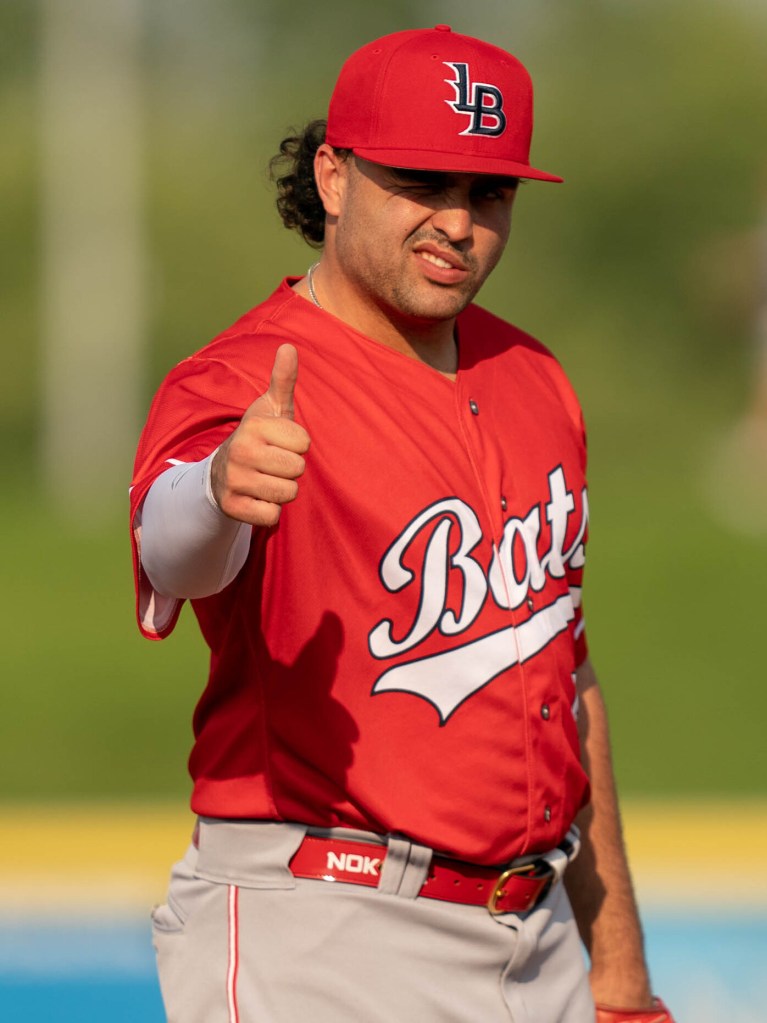
Stewart was a different kind of rookie. He played all 162 games. He started 161 of them. 32 home runs, 112 RBIs — a Reds rookie record for RBIs. The mark of 100, set by Jim Greengrass in 1953, had stood for 73 years. Stewart added 12 more.
On August 26, he became the first player in the majors that season to reach 100 RBIs. He finished third in all of baseball in RBIs. Second in the National League in RBIs, eighth in home runs. His 20 home runs before the All-Star break were a club rookie record. His 164 hits were tied for second in the National League, and the most by a Reds rookie since Pete Rose’s 170 in 1963.
There is more. He was the first rookie since Jose Canseco in 1986 to hit 30 home runs with 100 RBIs and 15 stolen bases in a season. He played 117 games at first base, 45 at third, 11 as designated hitter, and eight at second — filling whatever hole the lineup had.
But there was an argument over the award. By WAR, Stewart was not in the race. FanGraphs had Mets outfielder Carson Benge at 4.3 WAR and Stewart at 1.9. Baseball Reference had Cardinals second baseman JJ Wetherholt at 4.5 and Stewart at 1.8. Benge hit .282 with 20 home runs and 22 steals, and Wetherholt was a Gold Glove finalist — the Gold Glove goes to the best defender at each position. Stewart slumped in September, hitting .247 with one extra-base hit in 24 games, and lost the NL RBI lead to Cardinals slugger Alec Burleson late in the season.
Still, the votes went to Stewart. 20 first-place votes, 170 points. Benge had seven votes and 107 points, Wetherholt three votes and 99 points. USA Today summed it up: “The voters chose home runs, RBIs, and 162 games.”
Stewart himself pointed to the games played, not the numbers. “The people around me know how hard it is to play 162 games. Showing up for your teammates every day — that’s not something that stands out. I hope my teammates know that, and that I was always there. That’s what I’m most proud of.”
His reaction right after the announcement was short and direct. “Phew, I feel relieved. I kept telling myself this award would come to me. That’s how I grew up, I worked hard, and I did everything I could. I’m a kid from Miami. I worked hard for this moment. A lot of people doubted me.”
And then he looked straight ahead. “My career is just getting started. I promise you. This is just a stepping stone, and there’s a lot more coming. I want to win for this city. I don’t want to watch the playoffs on TV anymore. I want to play on that stage.”
The Real Reward Was Behind the Trophy
Both teams got one more thing that night besides the trophy: an extra pick right after the first round of the 2027 draft. That is the heart of this story.
The system is the Prospect Promotion Incentive — the PPI. It rewards clubs for bringing a top prospect up when he is ready, and it is designed to stop the practice of delaying a debut to manipulate service time and gain an extra year of control. Service time is the days a player spends in the big leagues; it decides his salary and when he can become a free agent. If a prospect makes the Opening Day roster, earns a full year of service time, and then wins Rookie of the Year or finishes in the top three of MVP voting, his club receives an extra pick right after the first round of the next year’s draft.
McGonigle is the textbook case. Detroit put him on the Opening Day roster, and he earned a full year of service time. The contract came after his debut, on April 15, so it did not affect his PPI eligibility. That is how Detroit locked up a $150 million player through 2034 and still collected the bonus pick.
The pick is worth plenty. According to USA Today, these bonus picks have landed in the 26–32 range overall — about where Detroit took McGonigle at No. 37 in 2023. In other words, one McGonigle just gave his club the chance to draft another McGonigle.
Cincinnati is in the same position. Stewart spent the whole year in the big leagues and won Rookie of the Year, so the Reds also get a pick right after the first round of the 2027 draft. But the two players are in different places. McGonigle is already signed through 2034. Stewart said in June that he was open to an extension, but the Reds’ position was that “now is not the right time.” The award was the same, but what comes after it looks different.
The exact pick number is still to be determined. It will be set once the 2027 draft order is finalized.
Two 22-Year-Olds, One System
Rookie of the Year is supposed to be a player’s award. But the two Rookies of the Year in 2026 also showed how a player becomes a club’s asset. One signed for $150 million 17 games into his debut and still delivered a draft pick to his club. The other played 162 games without missing a day and delivered a draft pick to his club.
McGonigle was the 21-year-old who signed a contract without a suit to wear to the ceremony. Stewart was the 22-year-old from Miami who said “a lot of people doubted me.” The moment they won, both talked about what comes next. One talked about the tuxedo he will wear to the dinner next January. The other talked about the playoff stage.
A trophy is the end of a year. But behind this trophy sits a draft pick for the following year. That is why the 2026 Rookie of the Year story does not end with these two players. It continues with what Detroit and Cincinnati pick in the 2027 draft.
So when draft day comes next year, remember this night. Hidden inside whatever name gets called will be the story of two 22-year-olds.
Sources: Reuters, 2026-11-10 / USA Today, 2026-11-09 / NBC Sports, 2026-11-09 / Cincinnati Enquirer, 2026-11-09 / FanGraphs, 2026-04-15 (USA)


답글 남기기